
6 signs an NDIS participant may need additional supports
.avif)
When should an NDIS participant's supports be reviewed?
A participant's support needs can change gradually over time. While some changes are obvious, others emerge through small shifts in mobility, safety, participation or daily functioning.
For support coordinators, recognising these changes early can help ensure a participant's supports, funding and assistive technology continue to align with their goals, independence and safety needs.
How can you tell when a participant's support needs have changed?
The key question is not whether a participant requires support, but whether their level of support has changed from their usual baseline.
A review may be warranted when there is a noticeable change in how a participant functions, participates or manages everyday activities.
1. Has the participant's level of independence changed?
One of the clearest indicators is a change in how much assistance a participant requires compared to six or twelve months ago.
Examples may include:
- Requiring more prompting to complete routine tasks
- Taking significantly longer to complete personal care activities
- Needing supervision for activities previously completed independently
- Missing appointments or struggling to manage schedules
- Increased reliance on support workers to complete daily tasks
These changes may indicate that existing supports are no longer fully meeting the participant's needs.
2. Has there been a change in functional capacity?
Functional changes are often gradual and can be easy to overlook.
Observable indicators may include:
- Increased fatigue during community access
- Difficulty completing multi-step tasks
- Reduced stamina when walking familiar distances
- Slower transfers or movement around the home
- Reduced confidence performing routine activities
These changes can affect independence, community participation and progress towards NDIS goals.
3. Is falls risk increasing?
Falls and near-falls are among the most important indicators that support needs may require review.
Support coordinators may receive reports of:
- Increased falls or near-falls
- Holding onto furniture while walking
- Reduced balance or stability
- Avoidance of community activities due to safety concerns
- Loss of confidence following a previous fall
According to the Australian Institute of Health and Welfare, falls are one of the leading causes of injury-related hospitalisations in Australia. Research also shows that fear of falling can reduce confidence, limit community participation and increase reliance on supports, even when a participant has not sustained a significant injury*.
Recognising these changes early can help identify opportunities for intervention, assistive technology and support review.
Read our guide: What should you do if an NDIS participant is falling more often? →
4. Have communication, memory or decision-making abilities changed?
Changes in memory, communication or cognition can have a significant impact on daily functioning.
Look for:
- Missed appointments becoming more frequent
- Increased confusion with familiar routines
- Difficulty communicating needs or preferences
- Repeated questions or instructions
- Greater reliance on others for decision-making
Where these changes are affecting safety, participation or independence, a review of current supports may be beneficial.
For free information and support on cognitive changes, visit Healthdirect.
5. Has community participation reduced?
A participant may begin withdrawing from activities they previously enjoyed.
Examples include:
- Declining social outings
- Reduced attendance at community programs
- Avoiding public transport
- Cancelling appointments more frequently
- Limiting activities due to fatigue, mobility challenges or safety concerns
Reduced participation is often an early sign that barriers are emerging and current supports may need adjustment.
6. Has reliance on informal supports increased?
Family members and carers often notice changes before formal assessments occur.
Indicators may include:
- Increased requests for assistance
- More frequent welfare checks
- Greater reliance on family to manage appointments
- Additional support required outside funded hours
- Growing concerns about participant safety when alone
A sustained increase in informal support requirements may indicate the participant's needs have changed.
What should support workers do if they notice changes?
Support workers are often well placed to identify early changes in participants' needs. If concerns arise, document your observations and discuss a review of supports with your supervisor (or the participant/family as appropriate).
When documenting observations, it is beneficial to focus on:
- When changes were first observed
- Frequency of incidents or concerns
- Changes from the participant's previous baseline
- Falls, near-falls or safety incidents
- Changes in participation or independence
- Feedback from family members and other carers
- Impact on progress towards NDIS goals
When should a reassessment be considered?
A reassessment or plan review may be worth discussing when a participant experiences:
- Increased falls or safety incidents
- Reduced independence
- Functional decline
- Communication or cognitive changes
- Reduced community participation
- Increased reliance on informal supports
- Emerging risks that are not adequately addressed by current supports
Early identification can help ensure participants have access to the right supports, assistive technology and funding before challenges become barriers to independence.
Participants guide to changing an NDIS plan →
|
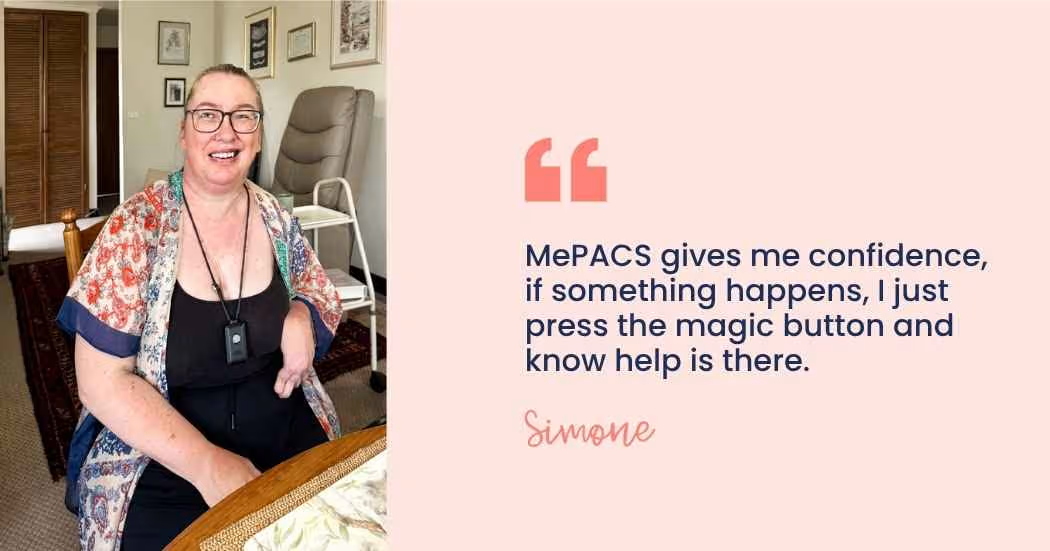
Simone's storySimone stays independent with help from the MePACS, who she lovingly calls "Sim's Angels". Read more |
Could assistive technology help maintain independence?
In some cases, a support review may identify assistive technology that helps address emerging risks while maintaining independence.
Depending on the participant's circumstances, this could include:
- Mobility aids
- Home modifications
- Falls-prevention equipment
- Smart home technologies
- Monitored personal alarms
For participants experiencing falls, safety concerns or periods alone at home or in the community, monitored personal alarms may provide a way to quickly access assistance when needed.
Can a personal alarm be funded through the NDIS?
Yes, MePACS personal alarms may be covered under ATHM funding where they are considered reasonable and necessary and are directly related to the participant's disability, goals and support needs. Funding decisions are assessed on an individual basis and should be supported by evidence demonstrating how the technology addresses identified risks or functional limitations.
Note that where a personal alarm is being considered as part of an NDIS-funded solution, support coordinators should ensure the product and provider meet relevant NDIS requirements.
MePACS is a Registered Provider for NDIS-funded personal alarms and offers a range of accessible alarm options to suit differing needs, abilities and lifestyles.
|
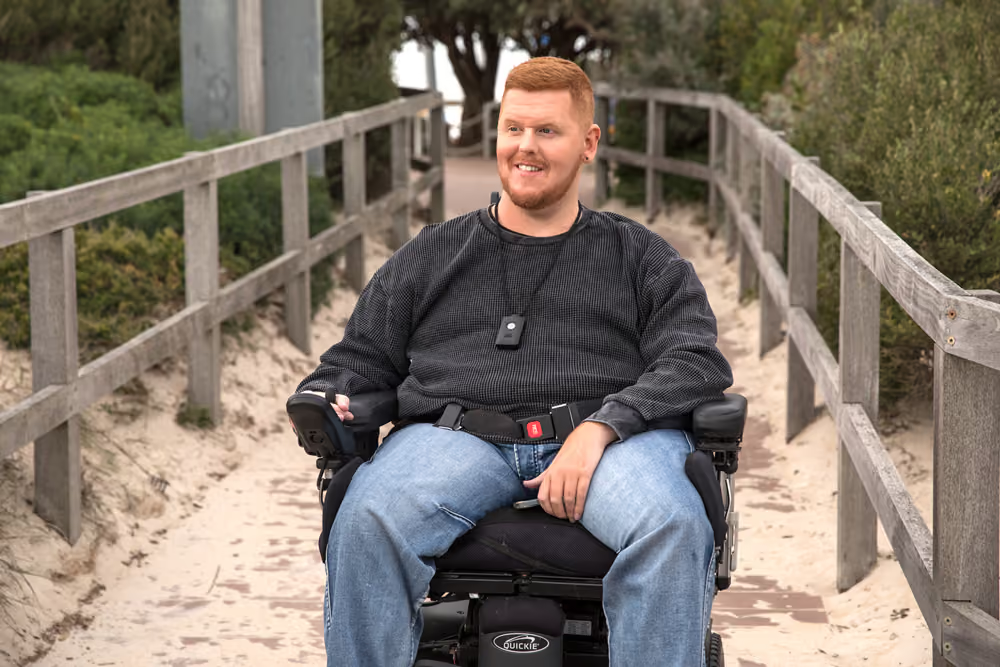
Helping participants stay independent for longerOur team can help you choose the best option for their needs. Contact Us |
* Sources:
www.aihw.gov.au/reports/injury/falls
www.betterhealth.vic.gov.au/health/conditionsandtreatments/falls-prevention
www.cec.health.nsw.gov.au/keep-patients-safe/falls-prevention
.avif)

.avif)
.avif)