
Lone worker duress alarms: A practical guide for managers
.avif)
Why lone worker safety matters
Workplace violence and aggression are significant issues across Australia, especially for staff who work alone or visit clients in unpredictable environments.
WorkSafe Victoria reports that up to 95% of healthcare workers experience verbal or physical assault at some point in their career, highlighting how common these incidents are.
The risk extends beyond healthcare. Lone workers are found in many industries, including:
- Healthcare, disability, aged care and community services
- Clinical labs, pathology and outreach care
- Emergency, crisis and support services
- Council field operations (animal management, compliance, inspections)
- Real estate and property management
- Utility, maintenance and field technician roles
What risks do lone workers face?
Lone workers commonly face two broad categories of risk:
Physical Risks: Violence or aggression, medical emergencies, unsafe environments, threatening animals, accidents or falls
Psychological Risks: Working alone can lead stress and fatigue, feelings of isolation, anxiety, especially after previous incidents and burnout
These risks affect not only the individual worker but also overall team morale, retention, and workplace productivity. When workers operate alone, the lack of immediate backup increases the impact of any incident. Employers also have a legal duty of care under the Work Health and Safety Act (WHS) to minimise risks and ensure workers can access help quickly if something goes wrong. A duress alarm is one of the simplest and most effective ways to fulfil these responsibilities.
What is a duress alarm and how does it work?
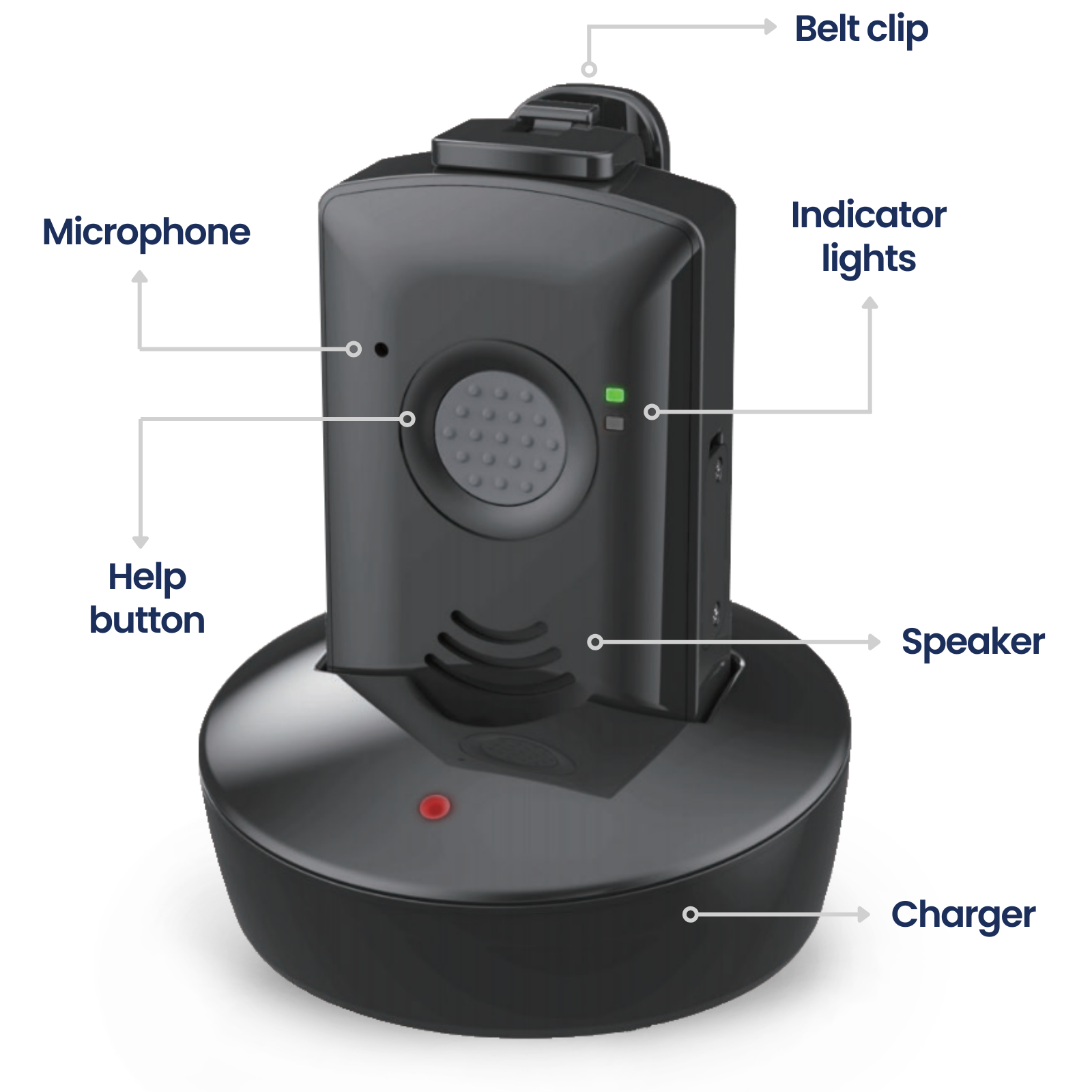
A duress alarm is a small, wearable device designed to help a worker quickly request assistance in an emergency. By pressing a single button, the worker can quickly alert an emergency response service or designated contact and get the right help.
Monitored Duress alarms are connected to a 24/7 professional emergency response and often include:
- One‑touch activation
- Two‑way voice communication
- GPS location tracking
- Recorded call audio (useful for incident reviews and legal purposes)
- Fast escalation to managers, security or emergency services
These features allow workers to request help even if they cannot reach a mobile phone, are under threat, or are dealing with a medical emergency.

|
Explore Practical Duress SolutionsStrengthen your lone worker safety strategy and find out how a dedicated duress alarm can support your team. Visit Duress Alarm Page |
When should a worker activate their duress alarm?
Workers should activate their duress alarm whenever they:
- Feel unsafe or threatened
- Notice escalating behaviour from a client or bystander
- Encounter a medical emergency
- Are unable to leave the environment safely
- Experience a fire or hazard
- Need immediate assistance and cannot use their phone
A duress alarm is designed to support, not replace, existing workplace procedures and de‑escalation training.
Do duress alarms work everywhere?
Most duress alarms rely on 4G mobile coverage to operate. Coverage is generally reliable across urban and regional areas but may be limited in areas with patchy receoption such as underground car parks, inside some concrete or steel structures and in remote or mountainous regions.
Managers should consider the typical locations where staff work before choosing a device.
Duress alarm vs duress mobile app
While some organisations consider using a mobile phone duress app as a solution, the experience of using one in a real emergency can be very different from using a dedicated duress device. A wearable device is designed for one purpose only: to get help fast. It sits on the worker’s lanyard or uniform, always within reach, and can be activated instantly with a single press.
That simplicity matters, because during a threatening situation people often lose fine motor skills and the ability to think clearly. In those moments, fishing a phone out of a pocket or bag, unlocking it, opening an app and navigating to the alert button can cause significant delays.
Reliability under pressure
Smartphones are built for many purposes, and that creates potential points of failure at the exact moment help is needed. The battery might be low, the screen might be locked, the app might close, or the worker may simply not have the phone on them.
A dedicated duress device is designed for one purpose: sending an emergency alert quickly and reliably. It won’t be interrupted by notifications, incoming calls or software crashes. It also works hands‑free, allowing responders to listen in or speak to the worker without them needing to hold or manipulate anything.
Discreet, Safe Activation
In situations involving aggression or escalating behaviour, reaching for a mobile phone can draw unwanted attention and even escalate the risk further. A duress alarm allows the worker to discreetly press a hidden button without alerting the person involved. This can help de‑escalate the situation while still ensuring help is on the way. While apps can serve as a helpful backup tool, they are not the same as a purpose‑built device that was designed to be used under extreme pressure.
Legal obligations for lone worker safety
Every employer in Australia has a responsibility under the Work Health and Safety Act (WHS) to provide a safe working environment for all staff, including those who work alone or off‑site. This includes identifying risks, putting measures in place to minimise them, and ensuring workers have a reliable way to get help during an incident.
Safe Work Australia states that employers must provide “adequate systems of communication” for isolated workers so they can access assistance when needed. In practice, this means relying solely on mobile phones or manual check‑ins is rarely enough. A duress alarm forms part of a strong safety system because it gives workers a fast and dependable way to call for help when other methods may fail.
A clear policy, combined with a reliable duress solution, helps organisations meet their WHS obligations and demonstrate due diligence in protecting their staff.
How to choose the right duress alarm
Not all duress alarms work the same way, and choosing the right system can feel overwhelming if you’re comparing unfamiliar features. A helpful starting point is to focus on what matters most in real‑world situations.
A duress alarm should be quick to activate, easy to use under stress, and dependable in unpredictable environments. Look for systems that offer clear two‑way communication, GPS location and provide fast, effective response.
It’s also important to think about the type of response behind the alarm. Some systems only send notifications, leaving managers responsible for monitoring them, while others ,such as MePACS, provide 24/7 support by trained professionals. The goal should always be to ensure workers can access help when they need it, without delay.
How to implement duress alarms in your organisation
Introducing duress alarms is most effective when combined with clear communication, training and supportive policies. Start by identifying which teams or roles face the highest risks, then establish guidelines for how and when alarms should be used.
Train staff on recognising escalating behaviour, knowing when to step back, and how to respond after activating an alarm. Many organisations also choose to update their lone worker procedures to include routine check‑ins, reporting processes and expectations around wearing the device.
Successful implementation depends on making the alarms part of everyday work routines—something workers put on as naturally as their ID badge. When staff understand why the alarms exist and how they protect them, adoption becomes easier and compliance much higher.
Common pitfalls to avoid when choosing a duress solution
Some systems appear inexpensive or convenient but can fall short in real‑world emergencies. Relying solely on mobile apps can be risky if the phone is locked, flat, out of reach or struggling with poor reception. Similarly, systems that only send text messages or notifications may leave workers waiting for a response if the recipient is busy or offline.
It’s also worth checking whether the service is monitored 24/7 and whether responders are trained to assess emergencies. A duress system should be reliable, easy to use and backed by a response process that ensures workers are never left waiting when they need help.
Why duress alarms are good for business
Beyond safety, duress alarms offer broader organisational benefits. Staff who feel supported are more confident in their roles, particularly when working alone or in the community. This directly contributes to higher morale, stronger engagement and lower turnover. It also reduces stress-related leave, workers’ compensation claims and the indirect costs that come with unplanned absences.
From a WHS perspective, having reliable duress measures in place helps demonstrate compliance and reduces the risk of legal and financial consequences. Just as importantly, a strong safety culture enhances your organisation’s reputation, making it easier to attract and retain skilled workers. Ultimately, investing in safety tools like duress alarms supports productivity, stability and trust across the workplace.

|
Ready to explore the right duress alarm for your team?We can help you assess the risks and recommend a system that fits your requirements. Enquire now |



.avif)