If you fall at home: 5 important steps to follow

Falls at home are a common cause of injury, particularly for older adults and people living with mobility challenges or ongoing health conditions. According to the Australian Institute of Health and Welfare (AIHW), more than half of all hospitalised fall-related injuries occur in the home, with many linked to everyday household hazards and clutter.
Knowing what to do after a fall can help reduce the risk of further injury, improve recovery outcomes and ensure you get the support you need.
1. Assess the situation
Try to remain calm and resist the urge to get up immediately.
Take a few moments to assess how you feel. Check for pain, dizziness, weakness, bleeding or signs of injury. Also look around for hazards such as wet floors, loose rugs, broken glass or clutter that may have contributed to the fall.
If you feel confident that you're uninjured, you may be able to get up slowly and carefully.
2. Call for help
If you're injured, unable to get up or unsure whether you've been hurt, it best to get help as soon as possible.
If you have a personal alarm nearby, activate it immediately. Falls detection alarms may already trigger an alert, but it's still recommended to activate the alarm manually if possible.
If you don't have a personal alarm and a phone is within reach, call a family member, friend, neighbour or emergency services, depending on the situation. If you are unable to reach your phone, call out for help.
Remaining on the floor for an extended period after a fall, sometimes called a "long lie", can increase the risk of complications such as dehydration, pressure injuries and hospitalisation. If you're unable to get up, focus on getting help and making yourself as comfortable as possible while you wait.
3. Stay warm and comfortable
If you're unable to get up, try to make yourself as comfortable as possible while waiting for help to arrive.
If you can do so safely, move onto a soft surface such as a rug or carpet and use a blanket, towel or clothing to help keep warm. This can be particularly important if you're waiting for assistance for an extended period.
4. Keep moving if it is safe
Prolonged periods on the floor can cause stiffness, discomfort and pressure injuries. If you are unable to get up and can move safely, gentle movements of your arms, legs, hands and feet may help maintain circulation and reduce discomfort while waiting for assistance.
Avoid any movement that increases pain or could worsen an injury.
5. Stay hydrated if possible
If water is within easy reach, take small sips while waiting for help. Maintaining hydration can be particularly important if you're unable to get help for an extended period.
|
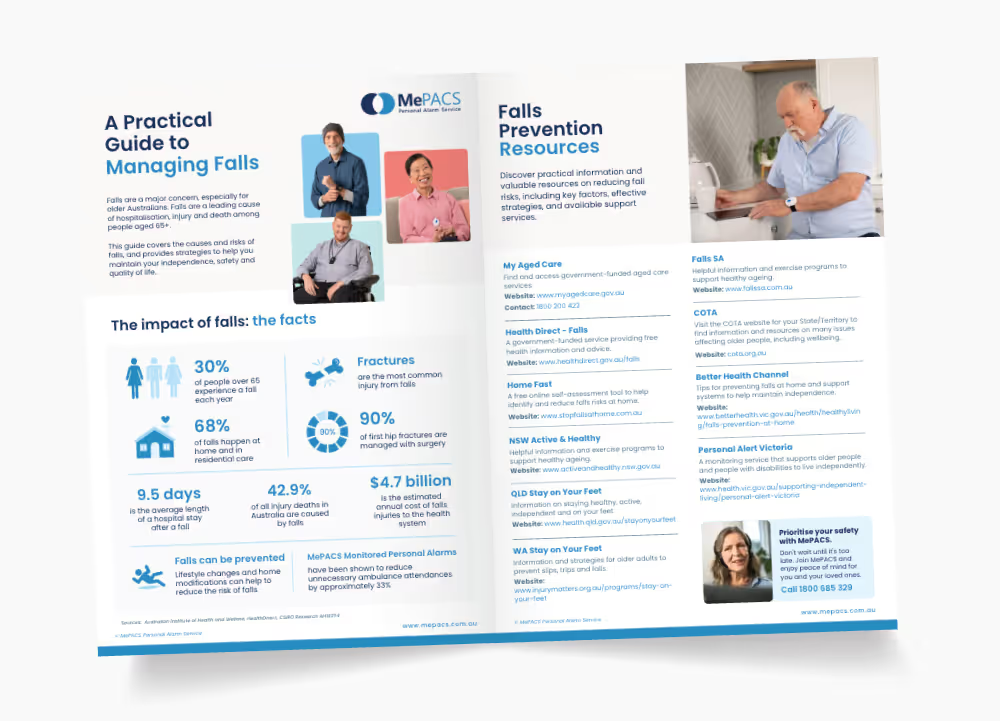
Download our falls prevention guideOur comprhensive 7-page falls prevention guide covers essential resources and practical tips for managing fall risks and living confidently. Learn more |
Understanding why the fall happened
Even if you don't think you've been seriously injured, it's important to let your GP or healthcare professional know about the fall.
A fall can sometimes be a sign of an underlying health issue, medication side effect, balance impairment or mobility change that may require further investigation. Identifying what caused the fall could help prevent it from happening again.
Ask yourself:
- Did you trip over something?
- Were you feeling dizzy or unwell?
- Was your vision affected?
- Did medication play a role?
- Were you rushing or carrying something?
-
Take measures to reduce your falls risk
Simple measures such as removing trip hazards, improving lighting, reviewing medications, wearing supportive footwear or using mobility aids can help reduce future falls risk.
To help reduce your risk of future falls:
- Remove trip hazards and clutter
- Improve lighting throughout the home
- Review medications with your GP
- Wear supportive footwear
- Stay active and maintain strength and balance
- Use mobility aids if recommended
Update your MePACS information
If you're a MePACS client, remember to let us know about any falls you've experienced by calling 1800 451 300.
Keeping your medical information up to date helps ensure our Response Team has the most accurate information available should you ever need assistance in the future.
While not every fall results in a serious injury, knowing how to respond and having a plan for getting help can make a significant difference to your safety, recovery and confidence.

|
Concerned about falls?A monitored personal alarm can help ensure help is always available. Whether you're looking for extra support at home or on the go, our team can help you find a personal alarm that's right for you. Enquire Now |