
Living with a heart condition: The life‑saving device clinicians recommend
Heart conditions in Australia
Did you know that more than one million Australians are currently living with heart conditions? That's a staggering number considering the risk of heart disease only increases with age. Many older adults want to stay active, social and independent — but the unpredictable nature of heart symptoms can create real concern.
Chest pain, dizziness, fainting, shortness of breath and irregular heartbeats can strike without warning, turning everyday moments into potential emergencies. For people who want to stay independent while feeling safer at home and on the go, a monitored personal alarm can make a meaningful difference. It’s a simple step that offers fast access to help when seconds matter — which is why more clinicians and healthcare professionals now recommend these devices to their patients.
What are the most common heart conditions?
Heart conditions vary, but many share the same challenge: symptoms can escalate quickly.
Common conditions include:
- Ischaemic heart disease – restricted blood flow to the heart
- Atherosclerosis – hardening and narrowing of arteries
- Arrhythmia – irregular heart rhythm that may cause fainting or palpitations
- Cardiomyopathy – weakened or stiffened heart muscle
- Heart attacks – sudden blockage stopping blood supply to the heart
Even when well‑managed, these conditions can cause sudden episodes that require immediate attention.
Why does a monitored personal alarm matter
Not all personal alarms offer the same level of support — and for people with heart conditions, the difference matters.
A monitored alarm connects you directly to a trained, 24/7 response team who already have your details and medical history on file and know exactly what to do. When the alarm is activated, the team quickly responds, assesses the situation and organises the right help straight away, whether it's contacting family or calling an ambulance.
There are no delays and no unanswered calls or messages to family or friends — just fast, reliable help from professional responders.
|
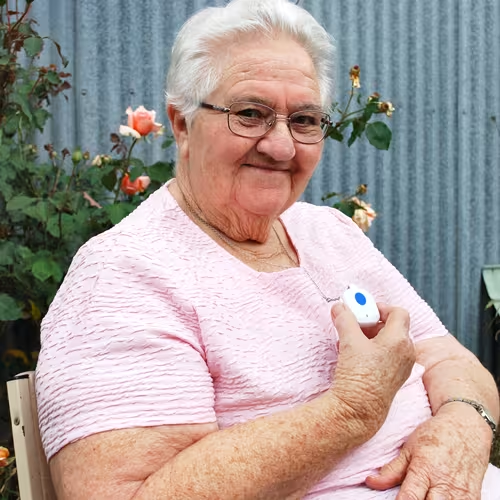
Barb's storyBarb didn’t realise that quiet grip around her arm was the start of a mild heart attack — but she sensed that something was wrong. |
How can a MePACS monitored personal alarm help people with heart disease?
1. Fast help — day or night
Family and friends may not always be available, but MePACS is ready to help 24/7, so you can always rely on us to be there for you.
2. Client-specific response
Your details and relevant medical history are stored securely on file. In an emergency, we provide them to emergency services to facilitate a faster, more informed response.
3. Reliable support, even if you are unresponsive
Your home address and key safe code are also kept securely on file, so we can send help even if you can't communicate. If you are away from home and have a mobile alarm or the Solo Connect watch, the GPS will advise us of your location.
4. Trained responders
Our emergency response team is trained in first aid and Triple Zero protocols. We know the right questions to ask so we can get you the right help, fast.
5. We stay connected
We stay in contact with you until help arrives, providing calm reassurance so you're never alone in an emergency.
Personal alarms and pacemakers
Most modern personal alarms are safe for people with pacemakers, but it’s important to choose one that complies with Australian Standards for Electromagnetic Compatibility (EMC). All MePACS alarms comply with the relevant Australian Standards. If you have concerns, please consult your medical specialist.
How do I know if it’s time to consider an alarm?
Many people think they “don’t need it yet.” But a personal alarm is often most valuable before a major incident happens, not after.
You might benefit from one if:
- You’ve had dizzy spells, fainting, or sudden heart symptoms
- You live on your own or spend long periods alone
- You’ve had a recent change in your heart health
- You worry about “what if something happens and I’m by myself?”
- Your family is concerned about your safety
- You want to stay independent — but with a reliable safety net
If any of these feel familiar, a monitored alarm can give you and your family the confidence and reassurance you’re missing.
Why choose MePACS?
There are several personal alarm options in Australia, but MePACS stands out because of:
- Consistently fast response times - in less than two minutes
- A local, caring 24/7 Australian-based response team
- 35+ years of supporting Australians
- Alarm options to suit different needs and budgets
- Australian Standards compliance
- Trusted by hospitals and care providers
It’s professional support you can rely on — day or night.
Can I get funding for a MePACS monitored personal alarm?
Funding for MePACS alarms may be available for eligible people through the following programs:
- Support at Home
- NDIS
- Personal Alert Victoria
- Personal Alert AssistanceSA
It's important to note that there may be a waiting period until your funding is approved. While waiting for funding approval, you can self-fund the MePACS service. Once your funding is approved, we can seamlessly transition you to a funded service.
Conclusion: A small choice that makes a big difference
Living with a heart condition doesn’t have to limit your independence or add stress to everyday life. A personal alarm gives you a simple, reliable safety net, so you never face a medical emergency alone. That’s why so many Australians choose MePACS. With fast response times, 24/7 professional monitoring by our local, caring team, MePACS offers reassurance you can feel every day. It’s not about expecting the worst — it’s about protecting your quality of life by staying confident, active and in control.
.avif)

.avif)
.avif)