How can clinicians help participants stay safe during a fire emergency?
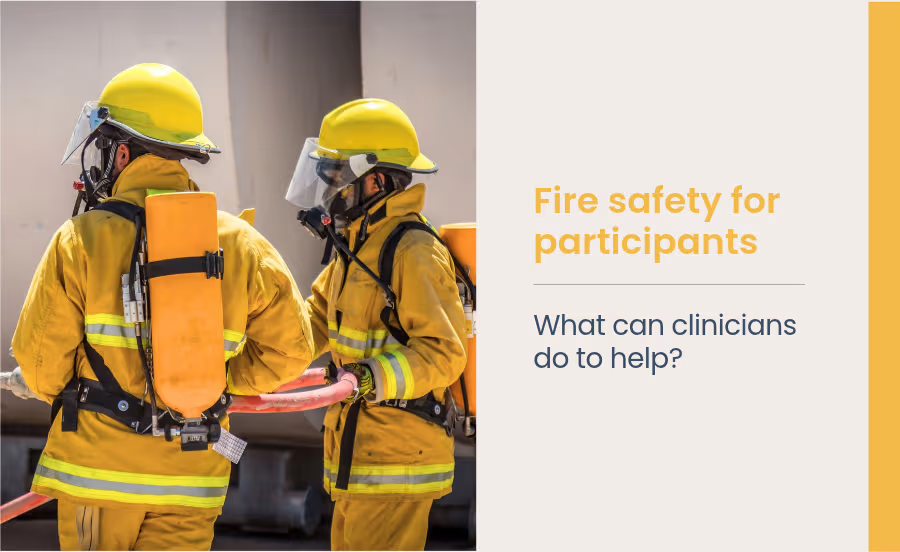
Fire emergencies are often associated with bushfire season, but the reality is that fires can occur at any time of year. House fires, kitchen fires, electrical faults, grass fires and bushfires can all develop quickly, leaving little time to make important decisions.
For older Australians and people living with disability, emergency situations can be more complex. A participant may require mobility aids, rely on medical equipment, need assistance with transport, or have communication needs that affect how they respond during an evacuation.
This is where clinicians, support coordinators and carers can play an important role. By incorporating fire safety into routine care planning, they can help participants understand their risks, develop practical emergency plans and identify supports that may improve safety.
Why planning ahead matters
Fire emergencies do not affect everyone equally. Following Victoria's Black Saturday bushfires, 44% of those who lost their lives were considered vulnerable, including older adults and people with additional support needs.
The risk extends beyond major bushfire events. Nearly 50% of house fire fatalities involve people aged 65 years and over. While these figures are concerning, they also highlight an important opportunity. The right planning, support and preparation can help reduce risk and improve outcomes when emergencies occur.
Emergency planning is not one-size-fits-all
For some participants, leaving quickly may be relatively straightforward. For others, it can involve a number of additional considerations. Mobility limitations, assistive technology, medication requirements, transport arrangements and caring for pets or assistance animals can all influence how a person responds during an emergency.
Taking the time to discuss these factors before an emergency occurs can help participants develop realistic plans that reflect their individual circumstances. It can also reduce uncertainty and support more confident decision-making during stressful situations.
Understanding Fire Danger Ratings
One of the simplest ways to stay informed about fire risk is to understand Fire Danger Ratings. These ratings indicate the potential severity of a fire if one starts and help people decide when they may need to take action.
Moderate
Most fires can be controlled. Stay informed and be prepared.
High
Fires can be dangerous. Be ready to act.
Extreme
Fires will spread quickly and be extremely dangerous. Take action now to protect yourself and your loved ones.
Catastrophic
If a fire starts and takes hold, lives are likely to be lost. Leaving high-risk areas is the safest option.
Fire Danger Ratings can apply throughout the year, not just during summer. Checking ratings throughout the year can help participants and support workers stay aware of changing conditions and make informed decisions early.
Learn more about Fire Danger Ratings on the CFA website.
Questions clinicians should discuss with participants
Emergency planning conversations do not need to be complicated. Often, a few simple questions can help identify gaps in preparedness:
- If you needed to leave your home quickly, how would you do it?
- Do you have transport arrangements in place?
- What medications, equipment or personal items would you need to take?
- Have you discussed your plans with family members or support people?
- Do you know where to access emergency warnings and updates?
These discussions can help participants think through potential challenges and identify practical solutions before an emergency occurs.
What should be included in an emergency plan?
A good emergency plan should reflect a participant's individual needs, support requirements and circumstances. The goal is to ensure they can act quickly and confidently if an emergency occurs, rather than making important decisions under pressure.
As a starting point, every plan should cover:
- When they would leave
- Where they would go
- How they would get there
- What they would need to take
- Who should be notified
It's also important to consider any factors that could affect a participant's ability to respond, such as mobility limitations, medications, assistive technology, support worker schedules or transport requirements.
The CFA provides free planning tools and resources that can help individuals, families and support providers develop a personalised emergency plan.
Preparing an emergency kit
Having an emergency kit ready can make it easier to leave quickly and reduce stress during an emergency. Ideally, participants should keep essential items together in a location that is easy to access.
An emergency kit may include:
- Medications and prescriptions
- Copies of important documents
- Mobile phone chargers and power banks
- Bottled water and snacks
- Spare clothing and personal care items
- Contact details for family, carers and support providers
- Pet supplies, if required
- Mobility aids, assistive technology or medical equipment needed for daily living
Clinicians and carers can support participants by helping them think about what they rely on each day and whether those items would be readily available if they needed to leave home quickly.
Assistive technology to support fire safety
Assistive technology can play an important role in emergency preparedness, providing additional safeguards and helping participants stay connected to support during unexpected situations.
Monitored Personal Alarm
During an emergency, being able to call for help quickly can make all the difference. A monitored personal alarm provides direct access to professional assistance at the press of a button, helping ensure the right support can be arranged when it's needed.
Unlike unmonitored alarms, which rely on nominated contacts being available and knowing how to respond, a monitored alarm connects participants to a professional response team 24 hours a day.
Smoke Detector
Early warning can make a significant difference during a house fire. The MePACS Smoke Detector works in conjunction with the Home Alarm and automatically sends an alert to the MePACS monitoring team if smoke is detected.
This means assistance can be initiated even if the participant is unable to press their alarm, reach a phone or respond to the situation themselves, providing an added layer of protection and reassurance.
The Daily Call Service
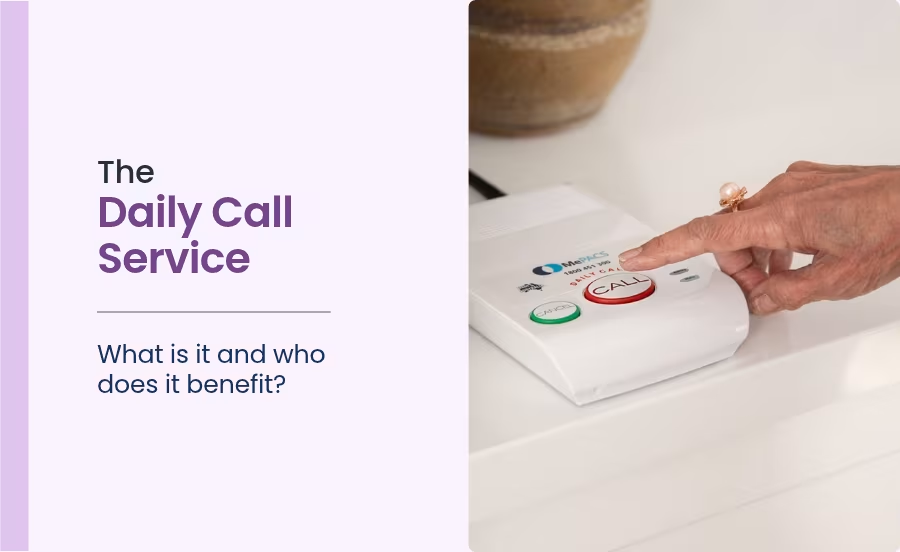
The MePACS Daily Call Service provides regular wellbeing check-ins at the press of a button. It is only available to MePACS Home Alarm users.
If a daily check-in is missed, MePACS follows up until the participant's wellbeing is confirmed. During emergency events or periods of heightened risk, regular wellbeing checks can provide added reassurance for participants, families and carers, helping ensure potential concerns are identified and followed up promptly.
Together, these services can strengthen a participant's emergency preparedness plan by providing multiple ways to access support, raise concerns and stay connected to assistance when it matters most.
Supporting fire safety and independence
Fire safety planning is not about creating fear. It's about helping participants feel informed, prepared and supported. By incorporating fire safety into routine care discussions, clinicians and carers can help participants make practical decisions that enhance safety while maintaining independence and choice.
After all, the best emergency plan is the one that's already in place before it's needed.

|
Support your partWhether you're looking for extra support at home or on the go, our team can help you choose the option that's right for you. Contact Us |